Wedding Seating Chart: Complete Guide to Perfect Table Arrangements
How to create the perfect wedding seating chart? Method, placement rules, free tools and mistakes to avoid for a smooth reception and happy guests.
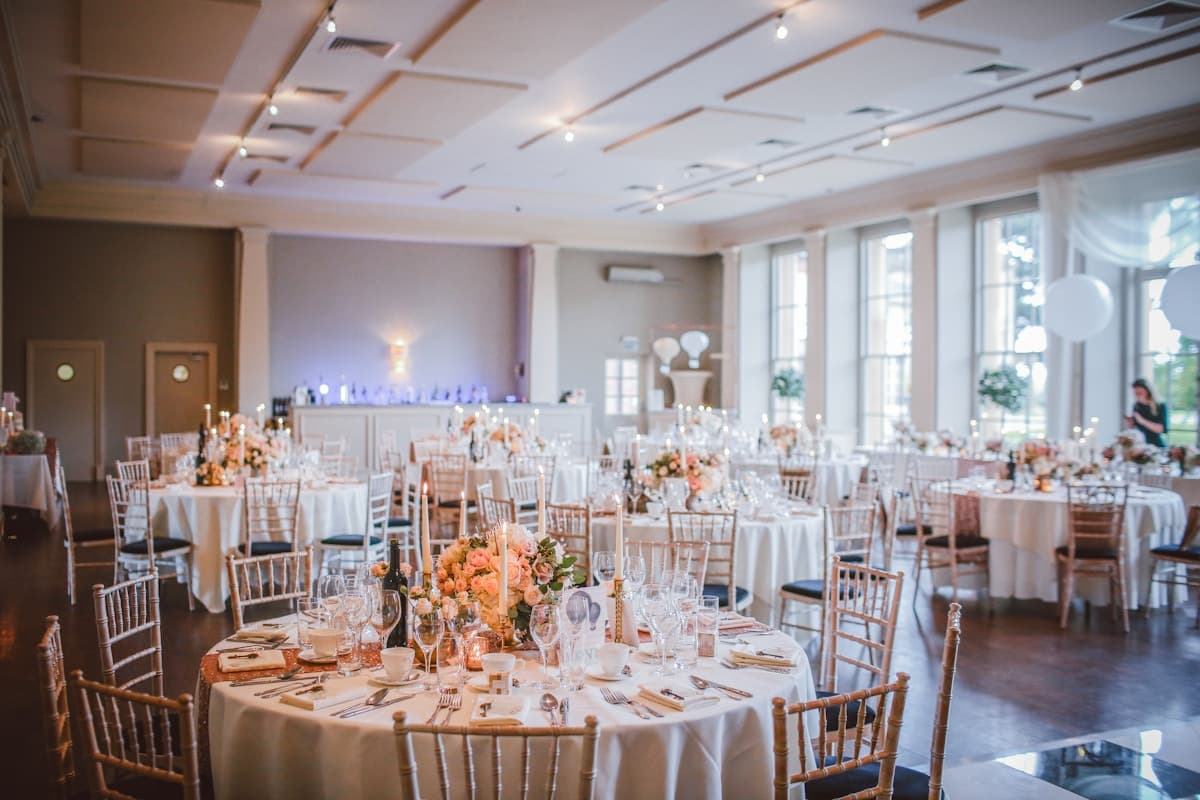
The seating chart: a headache... or not
Creating the seating chart is often described as one of the most stressful tasks in wedding planning. Between complex family dynamics, friends who don't know each other, different dietary requirements and personalities that don't get along, the exercise can quickly turn into a diplomatic puzzle.
Yet with a clear method and the right tools, the seating chart becomes a manageable — even enjoyable — step. This guide walks you through it step by step to place your guests intelligently and create a convivial atmosphere throughout the meal.
Why the seating chart matters so much
A poorly conceived seating chart can ruin the atmosphere of an entire meal. Conversely, a thoughtful arrangement can:
- Facilitate conversations between people who don't yet know each other
- Avoid tensions between guests who are on bad terms
- Put shy people at ease by surrounding them with familiar faces
- Free the couple from managing conflicts during the meal
- Optimize logistics (accessibility for guests with reduced mobility, proximity of tables with children...)
A good seating chart is felt even when it's not noticed: guests feel well-placed without knowing why.
When should you start making the seating chart?
Don't start too early: the final seating chart can only be established once RSVPs are complete. Ideally:
- 6-8 weeks before: make a first draft with responses already received
- 4 weeks before: refine after the RSVP deadline
- 2 weeks before: finalize and print
Always allow for last-minute cancellations (on average 3 to 5% of guests).
Fundamental placement rules
The wedding party table
The wedding party table (or "head table") is generally placed at the center of the room, facing the guests, or at the back of the space. Depending on the wedding style:
- High rectangular table: the couple at the center, flanked by their witnesses. Parents can be seated here or have their own honor table.
- U-shaped table or imperial table: for weddings with many close family members who want to be near the couple.
- Sweetheart table: just the couple at their own table — a rising trend. Allows the couple to enjoy their meal together and move freely to visit each table.
Children
Grouping children at one or two specific tables with planned activities is generally the best approach. Place these tables near their parents so younger children can easily rejoin their family if needed.
If there are very few children, it's sometimes better to seat them with their parents rather than isolating them.
Elderly guests and those with reduced mobility
Place them:
- Near exits and restrooms
- Away from speakers and music
- Sheltered from drafts (doors, windows)
- On chairs without armrests if they use a walker
Couples and singles
Avoid grouping all singles at a single "singles table" — it can feel like being set apart. Instead, mix profiles: one or two singles per table, surrounded by couples and potential new friends.
The step-by-step method
Step 1: Collect your data
Before starting the chart, gather:
- The complete guest list with confirmed RSVP status
- Specific constraints (reduced mobility, allergies, diets, incompatible personalities)
- The room configuration (number of tables, capacity of each table, table shape)
- Guest groups (groom's family, bride's family, work friends, childhood friends, etc.)
Step 2: Define your groups
Identify the natural "clusters" of your guests:
- Close family of each partner
- Extended family
- Childhood friends
- School / college friends
- Work colleagues
- Neighbors / local friends
- Mutual guests (that both partners know)
Step 3: Assign groups to tables
Start with the "easy" tables: close family, solid friend groups. Then handle the complex cases: divorced relatives, family rivalries, difficult personalities.
Basic rules:
- Avoid placing openly conflicting people at the same table
- Don't mix generations too extremely (unless you know it will work)
- Try to ensure every guest knows at least 2-3 people at their table
Step 4: Refine individual placement
Once tables are assigned, think about chair placement within each table (if you've opted for exact seating). Consider:
- Alternating men and women is a convention that's fading but still appreciated in traditional families
- Talkative people are best spread around
- Shy people will be more comfortable near close friends
Step 5: Have your chart reviewed
Show your plan to your witnesses or a close person who knows both families well. An outside eye can spot tensions you've missed or seating opportunities you haven't considered.
Special cases and tricky situations
Divorced or estranged parents
This is one of the most common scenarios. The simplest solution: one table each, with their respective partner if there is one, surrounded by people they're comfortable with. Avoid placing them face-to-face in the room.
If the relationship is particularly tense, quietly brief the MC or maitre d' to handle the situation if needed.
Ex-partners
The golden rule: don't place an ex within direct line of sight of the couple or their current partner. If their presence is unavoidable, choose a peripheral table with neutral guests.
Guests who don't speak the same language
If you have international guests, think about placing them near someone who can bridge linguistically. A guest isolated at a table where no one understands their language will be miserable all evening.
Babysitters and wedding staff
If you have staff (photographer, DJ, coordinator) who are staying for the meal, plan their seating. Same for babysitters who will be present all evening.
Tools for creating your seating chart
Index cards and sticky notes
The old-school method: stick sticky notes with guest names onto a room diagram and move them around until you find the perfect configuration. Effective, visual, but not very practical for frequent changes.
Google Sheets or Excel
One list per table in a spreadsheet. Simple, collaborative, easily modifiable. Ideal if you're comfortable with spreadsheets.
Specialized apps
Tools like AllSeated, TablePlanner or Social Tables offer advanced features: drag-and-drop guests, 3D room visualization, dietary requirement management... Most have a free version sufficient for a standard wedding.
wondr wedding
With wondr wedding, manage your RSVPs online to have an up-to-date confirmed guest list in real time. No more manually chasing each guest: your wedding website centralizes everything, and you can easily export the list to integrate into your seating chart tool.
How to display your seating chart on the day
Escort cards
Each guest receives a small card with their name and their table number or name. Aesthetic, customizable, and easy to organize alphabetically so people quickly find their card.
Wall plan
A large room map displayed at the entrance to the reception venue, with guest names organized by table. Practical for large weddings.
Chalkboard or mirror
Trending for several years, this option involves writing the seating chart on a large mirror or chalkboard. Very decorative, but beware: last-minute changes are complicated.
Digital plan
Increasingly, couples share their seating chart via their wedding website or by message to guests. Practical but less ceremonial.
How many people per table?
| Table type | Recommended number of guests | |---|---| | Round table (71 inches / 180 cm) | 8 to 10 people | | Round table (59 inches / 150 cm) | 6 to 8 people | | Rectangular table (94 inches / 240 cm) | 8 to 10 people | | Square table | 4 people | | Banquet table | Variable by length |
Avoid filling tables to maximum capacity: a table with a bit of space is more pleasant for conversation. Allow 10% empty seats if the room permits.
Last adjustments on the day
Even the most perfect plan can be thrown off at the last minute: a guest who cancels that morning, a couple who arrives separately when you didn't know... Plan for:
- Two or three "floating" chairs easily accessible
- One person (witness or coordinator) who knows your plan and can handle adjustments in real time
- A digital copy of the plan on your phone
The seating chart is a tool in service of your wedding, not a rigid constraint. Keeping some flexibility will save you a lot of stress.
Summary: the perfect seating chart checklist
- [ ] RSVPs collected and guest list finalized
- [ ] Exact room configuration obtained from the venue
- [ ] Constraints and special needs of each guest noted
- [ ] Guest groups identified
- [ ] Tables assigned by group
- [ ] Potential tensions avoided
- [ ] Guests with reduced mobility well-placed
- [ ] Children grouped with planned activities
- [ ] Plan reviewed by a close person
- [ ] Display format chosen and printed / made
- [ ] Digital copy accessible on the day
Frequently asked questions
How do you build a wedding seating chart?
List every guest and group them into natural “circles” (bride's family, groom's family, childhood friends, colleagues, etc.). Seat children and guests with reduced mobility first, then distribute the groups while keeping each table balanced in age and personality.
Should divorced relatives be seated apart?
Yes in 90 % of cases, unless the relationship is settled and they've explicitly asked otherwise. Place them at physically distant tables, ideally without direct line of sight, and raise the topic with them in advance to avoid any awkwardness on the day.
What size should wedding tables be?
Round tables of 8 to 10 remain the most sociable format: everyone can see each other and conversation flows. Above 12 the guests at opposite ends never speak. Long banquet-style tables need 60 cm of place setting per guest.
Where should you seat the children?
Two schools of thought: a dedicated kids' table (from 6–7 children, with a sitter or activities) or seated with their parents (under 5). Avoid putting a kids' table next to the dance floor or the speakers.
When should you finalise the seating chart?
No later than 2 weeks before the big day, but draft a first version 2 months out. Late RSVPs and last-minute cancellations mean you should keep some flexibility up to the final 4–5 days.
Ready to create your wedding website?
Centralise every practical detail for your guests in 5 minutes — RSVP, directions, accommodation, schedule. Free, elegant, mobile-first.
Create my site for free