Secular Wedding Ceremony: How to Plan a Personalized Wedding Celebration
Everything you need to know about a secular ceremony: definition, flow, choosing an officiant, texts, music and tips for creating a unique and moving ceremony.
What exactly is a secular wedding ceremony?
A secular ceremony (or symbolic ceremony) is a non-religious, non-official wedding celebration that comes in addition to — or takes the place of in spirit — the civil ceremony at city hall. It has no legal validity: it's your civil registry office ceremony that legally unites you.
However, it has enormous symbolic and emotional value. It's the ceremony you and your guests will remember as "the" wedding: the moment you said your vows, shared rituals, and were surrounded by those you love.
Secular ceremonies have seen explosive popularity growth in recent years. They now represent a very significant proportion of weddings, particularly among couples who want a personalized wedding but don't identify with a religious ceremony.
Who can officiate a secular ceremony?
Technically, anyone can officiate a secular ceremony — there's no mandatory certification required. In practice, you have several options:
The professional celebrant
A professional celebrant is someone specifically trained to create and lead secular ceremonies. They meet with you several times before the wedding, get to know you, build the ceremony with you, and lead it on the day with grace and emotional intelligence.
Advantages: professional, experienced with surprises, knows how to manage the crowd and emotions, relieves you of a large part of the organization. Budget: between $500 and $2,000 depending on experience and region.
A close friend or family member
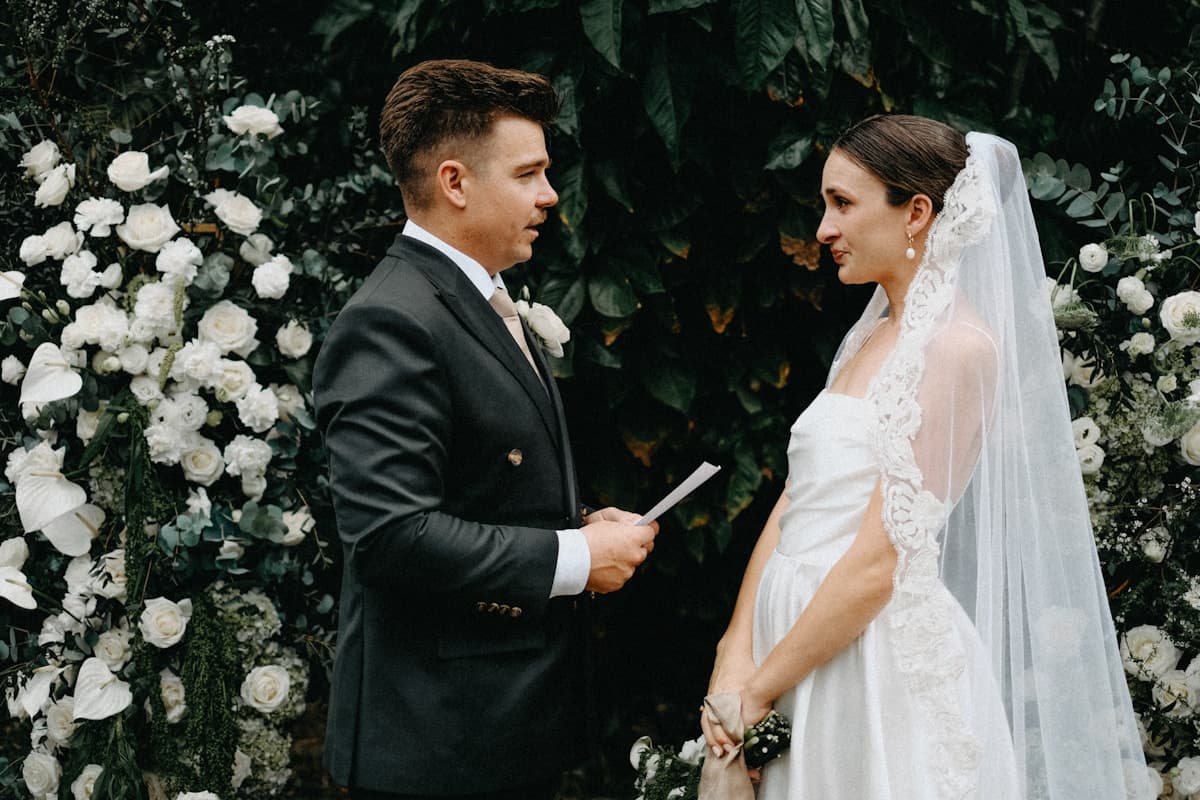
Asking a close friend, a sibling or a family member to officiate your ceremony can be very touching. It's a responsibility that requires preparation, but it often produces the most sincere and personal results.
Advantages: strong emotional connection, truly personalized speech. Points to watch: your chosen person must be comfortable speaking publicly and available to seriously prepare for the ceremony. Don't put them in a difficult position if you have doubts about their ability to handle the emotions of the day.
Co-officiating
Some couples choose to combine: a professional celebrant who structures and leads the ceremony, with loved ones who contribute readings, testimonials or specific rituals.
What does a secular ceremony look like?
There's no imposed structure, but here's a typical flow that works well:
1. The processional (5-10 min)
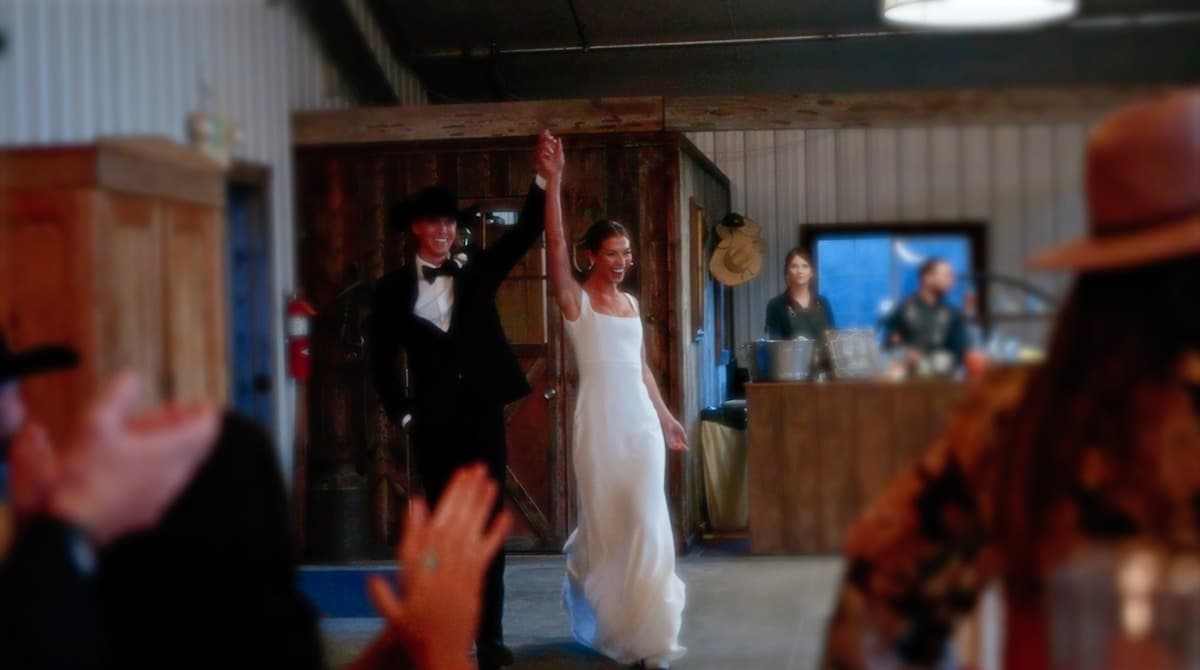
The wedding party enters to chosen music. The entrance order is up to you: you can arrive together, separately, with your parents, with your wedding party... The officiant welcomes the guests and briefly introduces the ceremony.
2. The opening address (5-10 min)
The officiant introduces the couple, their shared story, and explains the meaning of the ceremony. This is where the officiant "sets" the atmosphere and puts guests in the right mindset.
3. Readings and testimonials (10-20 min)
Loved ones read chosen texts: poems, literary excerpts, personal anecdotes... This is the opportunity to involve cherished people and add variety to the ceremony.
4. The wedding vows (5-10 min)
The emotional heart of the ceremony. Each partner recites their vows, generally written personally. See our complete guide on how to write wedding vows.
5. The ring exchange (5 min)
A witness presents the rings. The couple slides them onto each other's fingers. This simple and powerful ritual can be accompanied by a few words from the officiant.
6. Symbolic rituals (optional, 10-15 min)
One or more rituals can be integrated: unity candle, sand ceremony, tree planting, handfasting ribbon ceremony... See the dedicated section below.
7. The conclusion and kiss (5 min)
The officiant closes the ceremony, pronounces a final declaration, and announces "you may kiss." The couple exits to a festive piece of music.
Total duration: a secular ceremony generally lasts between 30 and 60 minutes. Less than that seems hurried. More than an hour, and guests begin to tire.
Symbolic rituals: which one to choose?
Rituals are visual and participatory moments that reinforce the meaning of the ceremony. Here are some of the most popular:
The unity candle
Each partner lights an individual candle (often handed by their parents), then together they light a third central candle with their two flames. A symbol of two lives becoming one.
The sand ceremony
Each partner pours colored sand into a shared vase. The two colors blend and form a unique pattern, impossible to separate. Symbolizes an indissoluble union. Particularly suited if one partner has children from a previous relationship (each child can add a layer of sand).
Handfasting (ribbon ritual)
Handfasting is an ancient Celtic ritual enjoying a modern revival. The couple's hands are tied together by one or several ribbons, forming a "knot." This is the origin of the expression "tying the knot." Very visual, very powerful symbolically.
The tree planting ritual
The couple mixes two soils in a shared pot and together plants a young tree or seed. Symbolizes shared growth and intertwining roots. The tree is later planted in the couple's garden.
The guests' vows
A participatory variation: the officiant asks guests to stand and repeat aloud a pledge of support to the couple. Very powerful for creating a sense of community.
The time capsule bottle
The couple each writes a letter describing their hopes for their marriage, then seals them in a bottle along with a bottle of wine or champagne. They commit to opening the bottle on an anniversary (5 years, 10 years...) or during a difficult period.
Choosing texts and music
For readings
Readings during a secular ceremony can draw from a very wide range:
- Poetry: Pablo Neruda, Mary Oliver, Rumi, E.E. Cummings, Walt Whitman
- Literature: excerpts from novels, historical love letters (Virginia Woolf, Keats...)
- Personal texts: a friend recounting your story, a letter written by a loved one
- Philosophical or spiritual texts: universal wisdom quotes
Tip: limit yourself to 2-3 readings. Too many texts "break" the ceremony's rhythm.
For music
Music contributes enormously to atmosphere. Plan for:
- Processional music: calm and meaningful (instrumental or vocal)
- Transition music between sections (during rituals especially)
- Recessional music: joyful, celebratory
Technical options: playlist through Bluetooth speaker, live music (musician, string quartet, choir), or a combination of both. Live music has a much greater emotional impact but comes at a cost.
Ceremony logistics
Ceremony venue
You can organize a secular ceremony almost anywhere:
- At your reception venue (event hall, castle, estate)
- Outdoors (garden, park, forest, seaside)
- At a place that holds meaning for you (where you met, where you live...)
Always have a rain backup plan if you opt for outdoors.
Sound system
This is the most underestimated technical point. If your ceremony takes place outdoors or in a large space, it's essential to have amplification (microphone for the officiant, speakers). Without it, no one can hear, and the magic is broken.
Opt for:
- A wireless (HF) microphone for the officiant
- Possibly a standing microphone for readings
- A sound system appropriate for the space size
Guest seating arrangement
Theater-style (all facing the "stage"), in a circle around the couple, or in a semicircle? The semicircle or circle arrangement is increasingly popular because it creates a strong sense of intimacy and inclusion. It doesn't suit all venue configurations, but if possible, it truly changes the experience.
Preparation time
For a well-prepared secular ceremony, allow:
- 1 to 2 preparation meetings with the celebrant
- 1 rehearsal the day before or morning of (essential for sound, processional, arrangement)
- The ceremony itself
Secular ceremony budget: what to plan for
| Item | Price range | |---|---| | Professional celebrant | $500 - $2,000 | | Sound system | $300 - $900 | | Live musician (1 person) | $400 - $1,200 | | Ceremony decoration | $200 - $1,500 | | Printed programs | $50 - $200 | | Indicative total | $1,500 - $5,800 |
These budgets vary enormously depending on region, season and your choices. It's entirely possible to organize a beautiful secular ceremony for under $1,000 if a loved one officiates and you handle the sound yourselves.
Questions to ask yourself before you start
- Overall tone: do you want a very emotional ceremony? Playful? Poetic? A mix of all three?
- Duration: 30 minutes? 45 minutes? An hour?
- Guest participation: do you want them to be actors or spectators?
- Rituals: which ones resonate with you? Which ones match your sensibility?
- Vows: does each partner write their own? Together? As an exchange of questions?
- Loved ones who contribute: who reads, who does what?
- Venue: indoors or outdoors? Before or during the cocktail hour?
Differences from a religious ceremony
| | Religious ceremony | Secular ceremony | |---|---|---| | Legal validity | No (unless foreign religious marriage recognized) | No | | Content freedom | Limited (imposed framework) | Total | | Duration | 45 min to 1h30 | 30 min to 1h | | Cost | Suggested donation | $0 to $2,000 | | Officiant | Priest, pastor, rabbi... | Anyone | | Venue | Religious building | Anywhere |
Share your ceremony program with your guests on wondr wedding
A well-organized secular ceremony starts with well-informed guests. With wondr wedding, share the detailed program of your day on your wedding website: time and location of the ceremony, planned flow, practical information (parking, dress code, accessibility...). Your guests will have all the information in real time from their phone, and you manage your RSVPs for free online.
Frequently asked questions
What is a secular wedding ceremony?
A non-religious, non-official wedding ceremony that supplements or replaces the form of the civil ceremony at the town hall. It is fully customisable (texts, rituals, music, location) and officiated by a friend, family member, or professional celebrant.
Does a secular ceremony have legal value?
No, none. Only the appearance before a civil registrar at the town hall marries you legally. A secular ceremony carries symbolic and emotional value, not legal — which is exactly why it's so free in form.
How much does a secular ceremony cost?
From €0 (friend officiating, venue already booked) up to €1,500 for a professional celebrant with full preparation. Plan on €600–900 on average for an experienced celebrant who prepares the ceremony in 3 to 4 meetings.
Who can officiate a secular ceremony?
Anyone you choose: a loved one (sibling, friend), a professional secular celebrant, or even the couple itself co-leading. No diploma required — what matters is preparation and being comfortable speaking in front of a crowd.
How long should a secular ceremony last?
Ideally between 30 and 45 minutes. Less and it feels glossed over; more and attention fades. Plan 5 to 7 minutes per speaker (officiant, witnesses, vows) and alternate with music or rituals to breathe.
Ready to create your wedding website?
Centralise every practical detail for your guests in 5 minutes — RSVP, directions, accommodation, schedule. Free, elegant, mobile-first.
Create my site for free